
HVAC tool for communicating systems.
-
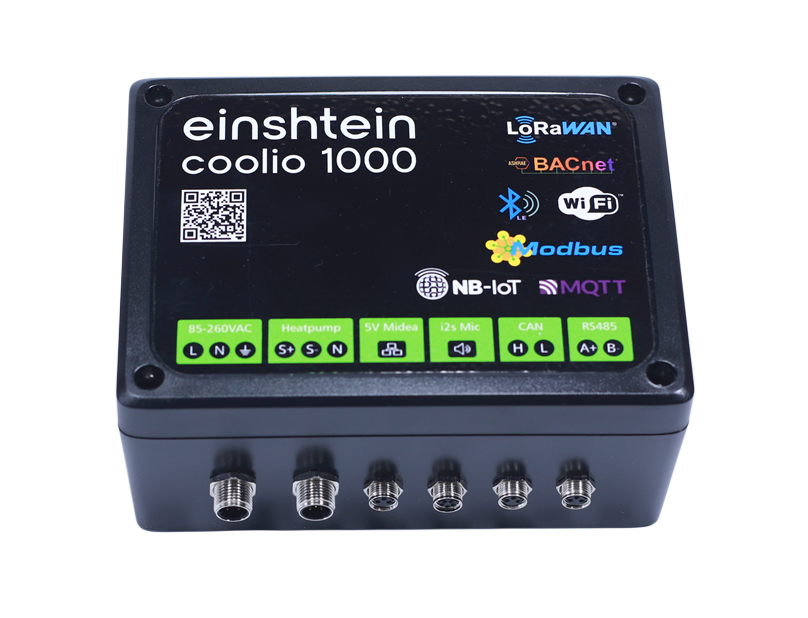
For communicating HVAC systems
coolio 1000 combines advanced diagnostics with AI-powered fault detection and predictive analytics. It predicts equipment failures 7–14 days ahead, works across major equipment brands, needs no added sensors, and covers residential ductless and central split systems and light commercial packaged units. coolio 1000 is part of einshtein’s complete AI, IoT, BI and field service tools ecosystem.
Key Features:
Predictive Fault Detection: On-device AI, trained on more than 50,000 hours of HVAC data and 500 hours of technician input, flags developing faults 7–14 days before they cause a breakdown. Detection keeps working even when the connection drops.
Remote Troubleshooting: Get instant alerts for HVAC irregularities, diagnose remotely, and dispatch only when needed.
Two Operating Modes: Passive protocol sniffing listens to the existing comms bus without transmitting, so system behavior is unchanged. Indoor unit emulation lets coolio 1000 query the outdoor unit directly for deeper, on-demand diagnostics. It can also adjust setpoint temperature and other parameters for added flexibility and control.
Broad Manufacturer Support: Autodetects the comms bus on major brands, including Daikin, Carrier, Trane, Lennox, Rheem, Mitsubishi Electric, Gree, Midea, LG, Hisense, TCL and others.
30-Minute Installation: One coolio 1000 per system. It taps the existing indoor–outdoor communication line and is powered from the outdoor or indoor unit. The IP67-rated enclosure (6.7 × 5.0 × 3.0 in) is built for outdoor-unit mounting and also suits indoor installations, with magnetic mounting where applicable.
Wireless Connectivity Options: Wi-Fi, cellular 3G/4G/LTE, LoRaWAN and Globalstar satellite. For short-term installations, cloud access is needed only while on site, through the einshtein app on the technician’s phone or tablet.
Coming Q1 2027: A software update adds water heater monitoring, so one coolio 1000 manages HVAC and the water heater concurrently. The same update adds leak detection and prevention, OpenADR demand response with utilities, and water, electricity and gas submetering.